
The deck vs patio debate usually starts after one frustrating summer outside.
Chairs sinking into the grass. Mud getting tracked through the back door after rain. Everybody crowding onto a tiny patch of concrete near the grill because there is nowhere comfortable to sit.
That is usually when homeowners start thinking seriously about upgrading the backyard.
Around Innisfil and Barrie, our team at Kell’s Garden City helps people sort through this decision all the time. A deck creates height and structure. A patio feels softer and more connected to the yard itself, especially with interlock stone, garden borders, natural pavers, and a fire pit glowing nearby.
The better choice depends on how you want the backyard to feel once summer finally arrives.
What Is the Difference Between a Deck and a Patio?
People compare deck or patio projects all the time because both create outdoor living space. The experience of using them feels very different once they are built.
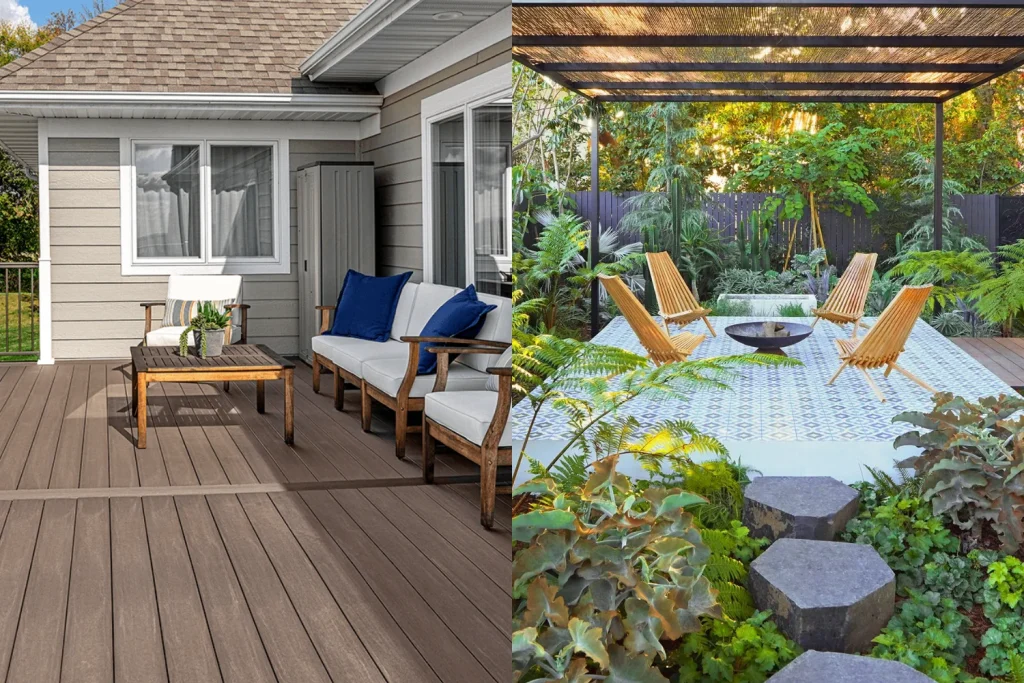
A deck changes the height of the yard. A patio changes the flow of it.
What Is a Deck
A deck is a raised platform built above ground level. Most decks use wood or composite boards supported by framing underneath.
Decks work especially well for homes with:
- Sloped yards
- Elevated back doors
- Uneven grading
- Smaller outdoor spaces needing more structure
A raised deck can create a cozy feeling, especially with railings, built in benches, string lighting, or pergolas overhead.
Wood decks feel warm and classic, especially cedar and pressure treated lumber. Composite decking has become popular for homeowners wanting less upkeep over time.
One thing people love about decks is the view. Sitting slightly above the yard changes the perspective completely, especially during summer evenings when everything starts glowing around sunset.
What Is a Patio
A patio sits directly on the ground and usually uses stone, interlock, concrete pavers, or porcelain materials.
Patios feel softer and more connected to the backyard around them. Garden beds flow naturally into the edges. Fire pit areas feel grounded and relaxed. Pathways can curve through the space without everything feeling too structured.
That is one reason patios work beautifully in Ontario landscapes.
Popular patio materials Ontario homeowners often choose include:
- Interlock pavers
- Natural stone
- Concrete patio stone
- Porcelain patio slabs
Patios also make it easier to shape the yard gradually over time. You can add pathways, decorative stone, mulch beds, or extra seating areas later without the whole project feeling disconnected.
Deck vs Patio Cost Comparison
Cost is usually where people start narrowing down the decision.
The price difference between a deck vs patio project depends heavily on yard conditions, material choices, and overall size. A simple patio can stay very budget friendly. A large natural stone patio with multiple seating zones will cost more. The same goes for decks.
Still, patios are often the more affordable choice overall.
Upfront Cost
Decks typically require more structure underneath.
That means:
- Framing
- Footings
- Hardware
- Railings
- Elevated support systems
Those materials add up fairly quickly.
Patios still need preparation, especially excavation and compacted patio base materials, though the installation process is often simpler on flat ground.
For many homeowners comparing patio vs deck cost, a patio becomes appealing because more of the budget goes toward the finished surface instead of hidden structural work underneath.
Long Term Maintenance Costs
This part matters more than people expect.
The excitement of a new backyard project fades eventually. Maintenance stays.
Wood decks usually need:
- Sealing
- Staining
- Washing
- Occasional board replacement
Ontario winters are rough on outdoor wood surfaces. Snow buildup, moisture, sun exposure, and freeze thaw cycles slowly wear things down over time.
Patios generally need less maintenance once installed correctly. Stone and interlock surfaces may need occasional leveling or fresh joint sand, though they usually stay durable for many years with a strong base underneath.
For homeowners searching low maintenance patio vs deck comparisons, patios usually come out ahead.
Cost Based on Materials
Material choice changes both the budget and the personality of the backyard.
Interlock patio vs deck conversations often come down to balancing appearance, durability, and upkeep.
A few examples homeowners around Barrie and Innisfil often compare:
- Pressure treated wood keeps deck costs lower upfront
- Composite decking lowers maintenance later
- Concrete pavers offer affordable patio layouts
- Natural stone creates a more high end finish
- Porcelain patio ideas suit modern outdoor spaces beautifully
Touching materials in person helps more than photos online ever will. Stone texture, colour variation, and scale all look different outdoors in natural light.
Deck vs Patio for Resale Value
Outdoor living space matters to buyers much more now than it did years ago.
People want backyards they can immediately picture themselves using.
Return on Investment
Decks often perform well for resale value because buyers instantly recognize the added usable space.
That said, a beautifully planned patio can completely change the feeling of a property too. Especially when it connects naturally with gardens, pathways, and landscaping around the yard.
The biggest return usually comes from outdoor spaces that feel finished, welcoming, and easy to maintain.
Curb Appeal and Outdoor Living Space
Patios have a softer presence visually.
Natural stone walkways, interlock borders, warm lighting, mulch beds, and garden edging all work together to create a backyard that feels established and inviting.
That relaxed feeling matters.
People often connect emotionally with patios because they feel like part of the landscape instead of sitting above it.
Which Adds More Value to a Home
There is no universal answer for deck vs patio for resale value because every property is different.
The better investment usually depends on:
- Yard layout
- Neighborhood style
- Material quality
- Maintenance condition
- Overall landscaping
A worn out wood deck loses appeal quickly. A poorly installed patio with drainage issues creates its own problems too.
The best outdoor projects feel natural beside the home and stay enjoyable long term.
Deck vs Patio Maintenance and Durability
A backyard project should feel exciting years later too.
Nobody wants to spend every warm weekend fixing boards or dealing with sinking stone.
Wood and Composite Deck Maintenance
Wood decks need consistent care to keep them looking good.
Rain, snow, direct sunlight, moisture, and temperature changes slowly wear down the surface. Boards may crack or fade over time. Staining and sealing usually become part of regular upkeep.
Composite decking lowers maintenance significantly, though it still benefits from occasional cleaning.
Some homeowners genuinely love the look and feel of wood enough to accept the extra work. Others prefer outdoor spaces that stay simpler to maintain.
Stone, Interlock, and Concrete Patio Maintenance
Patios generally ask for far less attention year after year.
Interlock, natural stone, and concrete pavers hold up beautifully when installed on strong patio base materials.
Maintenance usually stays fairly simple:
- Sweeping debris
- Rinsing surfaces
- Refreshing joint sand occasionally
- Minor leveling if needed over time
That lower maintenance is one reason patios continue growing in popularity across Ontario backyards.
Low Maintenance Patio vs Deck
Patios are usually the better fit for homeowners wanting lower upkeep.
Natural stone, interlock, and porcelain surfaces handle changing weather conditions extremely well once the foundation underneath is prepared correctly.
That base layer matters enormously.
Deck vs Patio for Different Yards
Every backyard behaves differently. The layout of the property often points homeowners toward the right choice naturally.
Sloped Yard vs Flat Yard
Decks work especially well for sloped yards because they create level usable space above uneven ground.
Patios fit naturally into flatter backyards where excavation and grading stay more manageable.
Some homeowners combine both beautifully. A small raised deck near the house leading toward a patio creates really comfortable flow through the yard.
Small Backyard vs Large Backyard
Patios often work beautifully in smaller spaces because they keep the yard feeling open.
Larger backyards allow more flexibility with zoning. Separate dining areas, fire pits, pathways, and lounge spaces all start fitting together more naturally.
Backyard patio planning becomes easier once homeowners think about how they actually want to use the space instead of only focusing on appearance.
Backyard Patio Planning
Good patio planning usually starts with a few simple questions:
- Where does the sun hit during the afternoon?
- Will you host dinners outside often?
- Do you want room for a fire pit?
- Will the patio connect to pathways or gardens?
- How much maintenance feels realistic long term?
These little decisions shape the whole project later.
Patio Materials vs Deck Materials
Materials completely change the atmosphere of an outdoor space. A backyard can feel rustic, modern, cozy, clean, natural, or relaxed depending on the surfaces used.
Interlock Patio vs Deck
Interlock patios remain one of the most popular hardscaping choices because they balance durability, flexibility, and appearance really well.
The laying patterns can feel classic or modern depending on the stone style chosen. Interlock also makes repairs easier later because individual pavers can be adjusted if needed.
Natural Stone Patio vs Deck
Natural stone patio vs deck decisions usually come down to feeling. Natural stone has texture and variation that instantly softens a backyard. It blends beautifully with gardens, mature trees, and landscaping around the home.
Warm stone under soft evening lighting creates a completely different atmosphere than raised decking.
Porcelain Patio Ideas
Porcelain patio ideas have become increasingly popular for cleaner and more modern outdoor spaces. The surface stays sleek and polished looking while handling moisture and weather really well.
Porcelain pairs beautifully with minimalist landscaping, black accents, and structured backyard layouts.
Patio Base Materials
The hidden work underneath a patio matters just as much as the surface materials above it.
Strong patio base materials help prevent:
- Sinking
- Shifting
- Drainage issues
- Uneven settling
Limestone screening remains one of the most common base products used beneath patios around Barrie and Innisfil because it compacts tightly and supports long term stability.
For many homeowners ordering hardscaping materials Barrie projects require, keeping everything organized matters too. Super Sacks help keep aggregates, stone, and base materials cleaner and easier to manage throughout the installation process. Materials stay dry, contained, and simple to access while work is happening in the yard.
How to Decide Between a Deck or Patio
The best outdoor spaces usually fit naturally with the home instead of forcing a trend that does not suit the property.
Budget
Patios are often more affordable overall, especially on flat ground.
Yard Layout
Sloped properties often benefit from decks. Flat backyards tend to work beautifully with patios.
Maintenance Preference
Patios generally require less long term upkeep than wood decking.
Long Term Value
Outdoor spaces should still feel comfortable and enjoyable years later. That matters far more than chasing whatever style feels trendy right now.
FAQs About Deck vs Patio
Is a deck or patio cheaper
Patios are usually cheaper to build than decks, especially on level properties with simpler layouts.
Does a deck or patio add more value
Both can add value depending on the property, layout, materials, and overall landscaping.
Is a patio lower maintenance than a deck
Yes. Patios generally require less maintenance than wood decks over time.
Should I build a deck or patio
The best choice depends on your yard layout, budget, maintenance preferences, and the kind of outdoor space you want to spend time in most often.
The nicest backyards rarely happen all at once.
They come together slowly through good materials, thoughtful planning, and outdoor spaces people genuinely enjoy using every day. Sometimes that starts with walking through stone options in person, comparing textures, and picturing how the backyard could feel a few summers from now.