
Spring shows up and suddenly every homeowner in the neighbourhood has the same idea.
Pull out last year’s dead growth, pick up a few flats of flowers, dig some holes, water everything, and hope for the best. By July, half of it has burned out in a heat wave or quietly given up in a dry stretch, and the whole process starts over next year.
It doesn’t have to work that way. The best low maintenance plants for Ontario are the ones that come back on their own, handle the cold, tolerate dry spells, and still look good doing it. Once they’re settled in the ground with good soil underneath them, they largely take it from there.
Read on if you’re curious about what gardening in Ontario can feel like when you choose the right plants from the start.
What Makes a Plant Low Maintenance in Ontario
Ontario’s climate asks a lot of plants. Winters dip hard, summers bring both drought and humidity, and the transition seasons can swing wildly from one week to the next. Most of the province sits in hardiness zones 5 and 6, which means the plants you put in the ground need to survive temperatures that can hit -20°C or colder without any help from you.
A low maintenance plant in Ontario checks a few specific boxes:
- Winter hardiness in zones 5 or 6. A plant that can’t survive the freeze isn’t low maintenance. It just needs to be replaced every spring
- Drought tolerance once established. Ontario summers can go dry for weeks at a time. Plants that need constant watering during those stretches are a full-time job
- Minimal pest and disease pressure. A plant that requires regular spraying or treatment is the opposite of hands-off
- Self-sufficient after the first season. The first year, most plants need some extra water while their roots settle in. After that, a truly low maintenance plant finds its footing and handles things independently
Perennials are the single best choice for low maintenance gardens because they come back year after year. Annuals need to be replanted every season. Perennials do the work once and return on their own for years to come.
Best Low Maintenance Perennials for Ontario Gardens
These are the reliable ones. Each of them overwinters well in Ontario, handles some degree of drought, and fills your garden beds beautifully with very little effort on your part.
Coneflower (Echinacea purpurea)
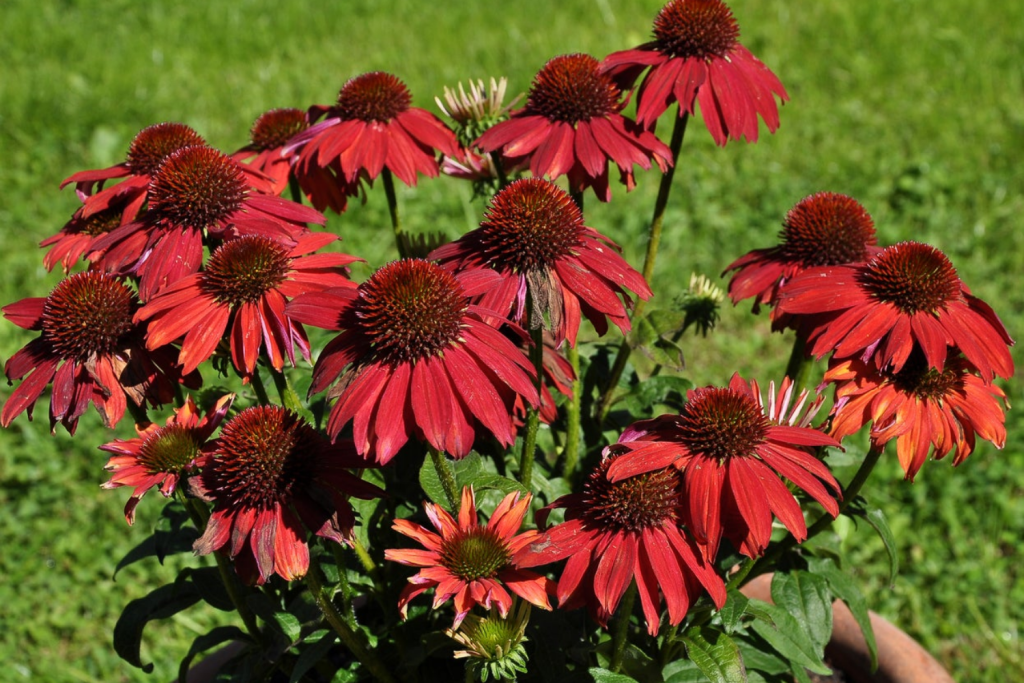
Coneflower is one of the most dependable perennials you can plant in Ontario. The bold purple-pink petals around a warm, spiky centre bloom from midsummer through fall, and the plant keeps returning year after year with zero coaxing. It’s a native to North American prairies, which means the Ontario climate is already familiar territory.
- Full sun, though it tolerates light shade
- Drought tolerant once established, with deep roots that find moisture on their own
- Loved by bees and butterflies throughout the season
- Seed heads left standing through winter bring birds to the garden
Leave the seed heads standing at the end of the season rather than cutting them back. The birds appreciate it, and so does the garden’s overall structure through the colder months.
Black-Eyed Susan (Rudbeckia hirta)
Cheerful, sun-loving, and completely unfussy, Black-Eyed Susan brings a wave of golden yellow to Ontario gardens from July onward. It’s a native species, which gives it built-in resilience to local growing conditions. Plant it once and it will self-seed quietly, meaning more plants without any extra work from you.
- Thrives in full sun and tolerates poor soil
- Handles dry spells without wilting or dropping
- Pollinators visit constantly during the bloom season
- Works beautifully in naturalized beds and front yard plantings
Sedum (Hylotelephium)
Sedum is the plant for anyone who tends to underwater rather than over. Thick, fleshy leaves store moisture, letting the plant coast through dry stretches without showing stress. The late summer and fall blooms, in shades of dusty pink to deep rose, arrive right when many other perennials are finishing up.
- Exceptionally drought tolerant, by design
- Full sun and well-drained soil
- Compact, tidy growth habit that rarely needs dividing
- Attractive to pollinators in the fall when other nectar sources are winding down
‘Autumn Joy’ is one of the most popular varieties and an excellent starting point for beginners.
Daylilies (Hemerocallis hybrids)
Daylilies are remarkably forgiving plants. They adapt to a wide range of soil conditions, tolerate drought once their root systems are established, and multiply slowly on their own to fill out a garden bed over time. Each individual bloom lasts only one day, but the plant produces so many that the display carries on for weeks.
- Full sun to partial shade
- Drought tolerant with established roots
- Very low pest pressure
- Available in an enormous range of colours, from pale yellow to deep burgundy
One note: choose cultivated hybrids rather than the wild orange daylily (Hemerocallis fulva). The wild variety spreads aggressively and can become invasive in natural areas.
Hostas (Hosta cultivars)
Hostas are the answer for shaded areas where many plants struggle to survive. They’re grown primarily for their bold, textured foliage in shades of deep green, blue-green, gold, and variegated combinations. Once planted in the right spot with adequate moisture, they ask very little.
- Shade to partial shade, though some varieties tolerate more sun
- Prefers consistent moisture but adapts once established
- Returns faithfully each spring with very little intervention
- Excellent for filling ground beneath trees or along shaded foundations
Best Low Maintenance Shrubs for Ontario Landscaping
Shrubs are a foundational element of low maintenance Ontario gardens. Plant them once, give them a good start, and they hold their space in the landscape for years with minimal pruning or attention.
Hydrangea
Hydrangeas are a favourite for Ontario gardens because of their generous, long-lasting blooms and ability to come back reliably season after season. Panicle hydrangeas (Hydrangea paniculata) are particularly well-suited to Ontario’s climate, as they’re more cold hardy than other varieties and bloom on new wood each year, so late spring frosts don’t ruin the show.
- Full sun to partial shade depending on the variety
- Water regularly during establishment; drought tolerant once mature
- Blooms from midsummer through fall in creamy white, pink, or rose tones
- Requires only light annual pruning to maintain shape
Spirea
Spirea is a compact, tidy shrub that earns its place in low upkeep landscaping. It blooms prolifically in late spring or summer, depending on the variety, and its dense mounding form stays fairly neat without much attention. Most varieties are fully hardy in Ontario’s colder zones.
- Full sun for best flowering
- Very drought tolerant once established
- Minimal pruning needed, just a light shaping after bloom
- Attractive to pollinators during the flowering period
Boxwood
Boxwood is the classic choice for structure and year-round greenery in Ontario landscapes. It holds its shape well, grows slowly, and provides a clean, evergreen presence throughout all four seasons. It’s a popular choice for border edging, foundation plantings, and formal garden structures.
- Full sun to partial shade
- Drought tolerant once fully established
- Slow, controlled growth means less frequent pruning
- Evergreen, which gives the garden structure even in winter
Juniper
Juniper is one of the hardiest choices available for Ontario gardens. It shrugs off cold winters, tolerates dry sandy soils, and thrives in full sun without complaint. Ground cover varieties like creeping juniper spread to fill large areas with very little care, making them an excellent option for low maintenance front yard landscaping.
- Full sun, very drought tolerant
- Hardy in zones 3 through 9, so Ontario winters are no challenge at all
- Available in upright, mounding, and spreading forms
- Holds colour through winter, adding visual interest to the garden year-round
Ninebark (Physocarpus opulifolius)
Ninebark is a native Ontario shrub with excellent ornamental value and almost no requirements once it’s in the ground. The peeling, multi-layered bark gives it winter interest. Summer brings clusters of white or pink blooms, followed by reddish seed pods that birds enjoy. Foliage varieties like ‘Diablo’ add deep burgundy colour to the landscape throughout the growing season.
- Full sun to partial shade
- Drought tolerant and very cold hardy
- Requires minimal pruning, just thinning every few years
- Provides wildlife habitat and food through the seasons
Drought Tolerant Plants That Grow Well in Ontario
For spots that see a lot of sun and not much water, these plants are built to handle exactly that.
Yarrow (Achillea millefolium)
Yarrow is a tough, spreading perennial with feathery foliage and flat clusters of flowers in white, yellow, or pink. It thrives in poor, dry soil and full sun, and it spreads gently to fill in garden beds over time. It’s a native species, which makes it well-adapted to Ontario conditions and highly attractive to pollinators.
Russian Sage (Perovskia atriplicifolia)
Russian sage brings a soft, hazy column of silvery stems and small lavender-blue flowers that persists through most of the summer and into fall. The silvery-grey foliage looks attractive even when the plant isn’t in bloom, and the whole plant releases a pleasant, subtle fragrance when brushed.
Lavender (Lavandula angustifolia)
Lavender is one of the most drought tolerant perennials available for Ontario gardens, and it brings both fragrance and beauty in an easy-to-manage package. It needs full sun and excellent drainage to thrive, which makes it a natural fit for raised beds, slopes, or rocky areas.
Ornamental Grasses
Ornamental grasses are among the most low upkeep landscaping plants Ontario homeowners can choose. Once established, they grow with almost no irrigation, resist pests, and add movement and texture to the garden that few other plants can match.
Easy Front Yard and Landscaping Plants for Ontario Homes
Here’s our top picks!
Sunny Front Yards
A front yard that gets full sun all day has a lot of options for easy front yard plants in Ontario. Coneflower, Black-Eyed Susan, and Spirea all perform beautifully in full sun with minimal care. Creeping Juniper works well as a ground cover across larger sunny areas, filling in gradually without requiring any intervention. Ornamental grasses add height and movement at the back of a bed, while lower-growing sedums and yarrow fill in the front.
Shade Areas
For shaded areas under trees, along north-facing fences, or beside the house, Hostas are the most reliable beginner plants for Ontario gardens. Pair them with Solomon’s Seal (Polygonatum biflorum), a native perennial with arching stems and small white flowers, for a layered, natural look that requires almost nothing from you once it’s established.
Low Maintenance Landscaping
The most successful low maintenance landscapes in Ontario combine a few key elements: perennials for seasonal colour, shrubs for structure, and ground covers or ornamental grasses to fill the spaces in between. This layered approach minimizes bare soil, which is where weeds take hold, and creates a garden that fills itself in over time rather than leaving gaps that need constant replanting.
How to Plan a Low Maintenance Garden in Ontario
Choosing the right plants is only part of the equation. The other part is setting the garden up so that the plants can actually do their job.
Use Mulch to Reduce Weeds
A layer of mulch two to three inches deep around your plants does several things at once. It suppresses weed germination by blocking light from reaching the soil surface. It retains soil moisture, which means less watering during dry stretches. And it breaks down slowly over time, adding organic matter that improves soil structure.
At Kell’s Garden City, we carry a range of mulch products suited to different garden needs. A consistent mulch layer is one of the simplest things you can do to reduce the ongoing maintenance burden of any garden bed.
Choose Perennials Instead of Annuals
This is the most straightforward shift a beginner gardener can make. Annuals need to be purchased and replanted every single spring. Perennials return on their own. Over a three to five year period, a garden planted primarily with perennials becomes significantly less work than one relying on annuals for colour.
Plant in Groups and Garden Beds
Single plants spaced widely apart leave a lot of bare soil exposed, which weeds fill in immediately. Planting in groups of three, five, or more of the same plant creates a denser bed that covers ground faster and looks more cohesive. Defined garden beds with a clear edge also make maintenance easier, as mowing and edging around them becomes straightforward.
Improve Soil Before Planting
Good soil is the most important investment you can make before putting any plant in the ground. Plants growing in healthy, well-structured soil develop stronger root systems, resist drought better, and establish faster than plants struggling in compacted or nutrient-poor earth.
Our screened topsoil is processed to remove rocks, sticks, weeds, and debris, giving your plants the cleanest possible foundation to grow from. For lawn overseeding or filling sunken areas, our Nature’s Blend combines black peat loam, compost, and a touch of mineral soil into a ready-to-use mix. Our Premium TopDressing Mix is ideal for building up soil quality in existing beds over time.
FAQs
What plants grow best in Ontario?
Plants that are hardy in zones 5 and 6, tolerant of cold winters and dry summer spells, tend to perform best across most of Ontario. Native perennials like coneflower, Black-Eyed Susan, and ornamental grasses are particularly well-adapted because they evolved in conditions similar to Ontario’s. Shrubs like ninebark, spirea, and juniper are also excellent performers.
What are the easiest plants to grow in Ontario?
For beginner gardeners, daylilies, hostas, and sedum are among the easiest to start with. All three are forgiving of less-than-perfect conditions, return reliably each spring, and require minimal attention once established.
What plants survive Ontario winters?
Any plant rated hardy to zone 5 or colder will survive Ontario winters without additional protection in most parts of the province. This includes the majority of perennials and shrubs listed in this article.
What are low maintenance landscaping plants?
Low maintenance landscaping plants are those that require minimal watering, pruning, fertilizing, and replanting once established. In Ontario, this generally means perennials over annuals, drought tolerant species for sunny spots, and native plants that are already adapted to local soil and climate conditions
Where to Buy Low Maintenance Plants and Garden Supplies in Barrie and Innisfil
Kell’s Garden City is located at 1451 10th Line, Innisfil Beach, serving homeowners and gardeners across Barrie, Innisfil, and the surrounding area. We carry soil, mulch, compost, stone, aggregates, grass seed, fertilizer, and everything else you need to set up a garden that actually thrives in Ontario’s climate.
Our Super Sacks make delivery simple. Each bag holds a full cubic yard of your chosen material, packed in weatherproof polypropylene with a spout bottom for easy, controlled release. No mess, no waste, no leftover bags piled in the garage.
To estimate how much material your project needs, use our online calculator before you order.